電動車專題|電動車小型化拯救紅海市場(上)
作者:智璞產業趨勢研究所綠能中心主任 余適伯
In 2024, amidst a wave of skepticism, the impact on the electric car market varies, with start-ups such as Lucied, Rivian, and Lordstown Motor suffering the most because they have yet to even finish building their production capacity. Tesla, the former representative of electric vehicles, has also suffered a wave of correction due to its over-rating in the past. However, in the first quarter of 2024, after the release of the financial report of each company, the current champion of new energy vehicle sales, BYD, has risen from the trough like a phoenix.
In-house production, low price, and a wide range of vehicles: Three advantages that drive BYD's growth in the face of adversity.
Looking ahead to 2024, BYD's stock price climbed up gradually after hitting a low at the end of January, announcing first-quarter sales of more than 620,000 units in April, a year-over-year increase of 13%, with March's sales of 302,459 units up by 46.1%, and its stock price showing a strong growth trend since the end of January. Admittedly, there are many reasons for short-term volatility in the stock market, but the fact that investors are still willing to buy into the market amidst a downward correction in demand for electric vehicles indicates that the market is still confident in the company's long-term growth. Therefore, a deeper understanding of BYD's strengths is key to the future development of electric vehicles.
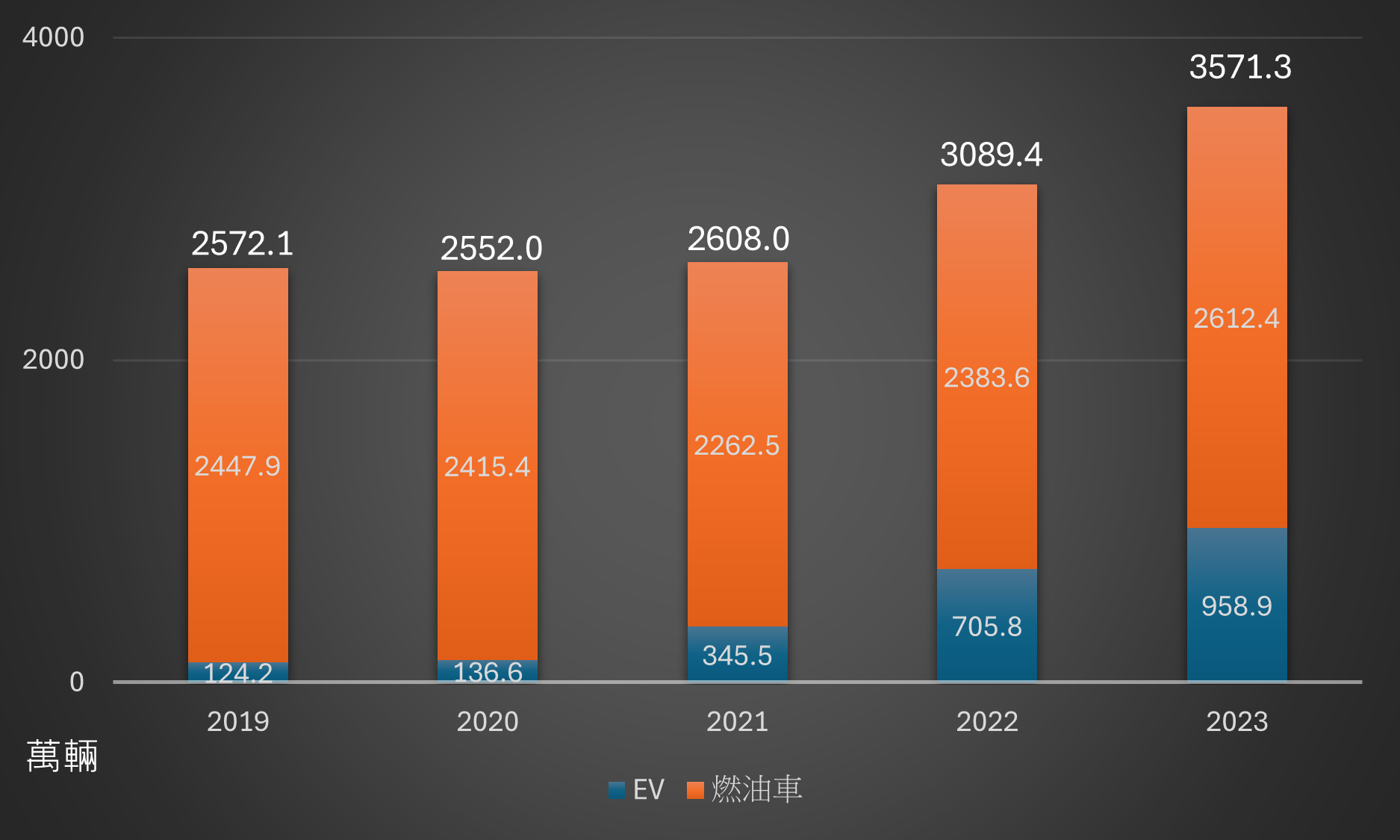
- High proportion of self-produced parts: Over the past three decades, China has become the world's factory with cheap labor, huge subsidies, complete infrastructure, and preferential policies to attract foreign investment. This is also the case in the automotive industry. Since 2019, when China's automotive production exceeded 25 million units, it has never fallen below this figure, and has steadily ranked as the world's No. 1 automotive producer (Figure 1), and the dependence of the electric vehicle industry on China is even more serious. This is due to China's policy on new energy vehicles, and Tesla's expansion of production in China has also indirectly promoted the formation of the overall industry cluster; ultimately, China's EV industry has taken the lead in the industry from the upstream supply of raw materials, the midstream production of parts, and the downstream assembly of complete vehicles. With the maturity of the related industries, BYD's ambition to produce vehicle components in its own factories is gradually being realized, allowing it to start from the assembly plant, enter the electrical system, electronic control system, and ultimately cut into the battery system to complete the integration; according to a UBS report in 2023, the disassembly of BYD's "Seal" model found that the proportion of components produced in-house was as high as 75%. In addition, the quality of the car, its interior, the introduction of technological equipment, and even the design of the car are not inferior to those of European carmakers. This proves that with a high rate of in-house production, BYD has been able to produce EVs that meet the market demand, rather than just building a car behind closed doors to satisfy itself.
Figure 1: China's Automobile Production Capacity
Source: Marklines
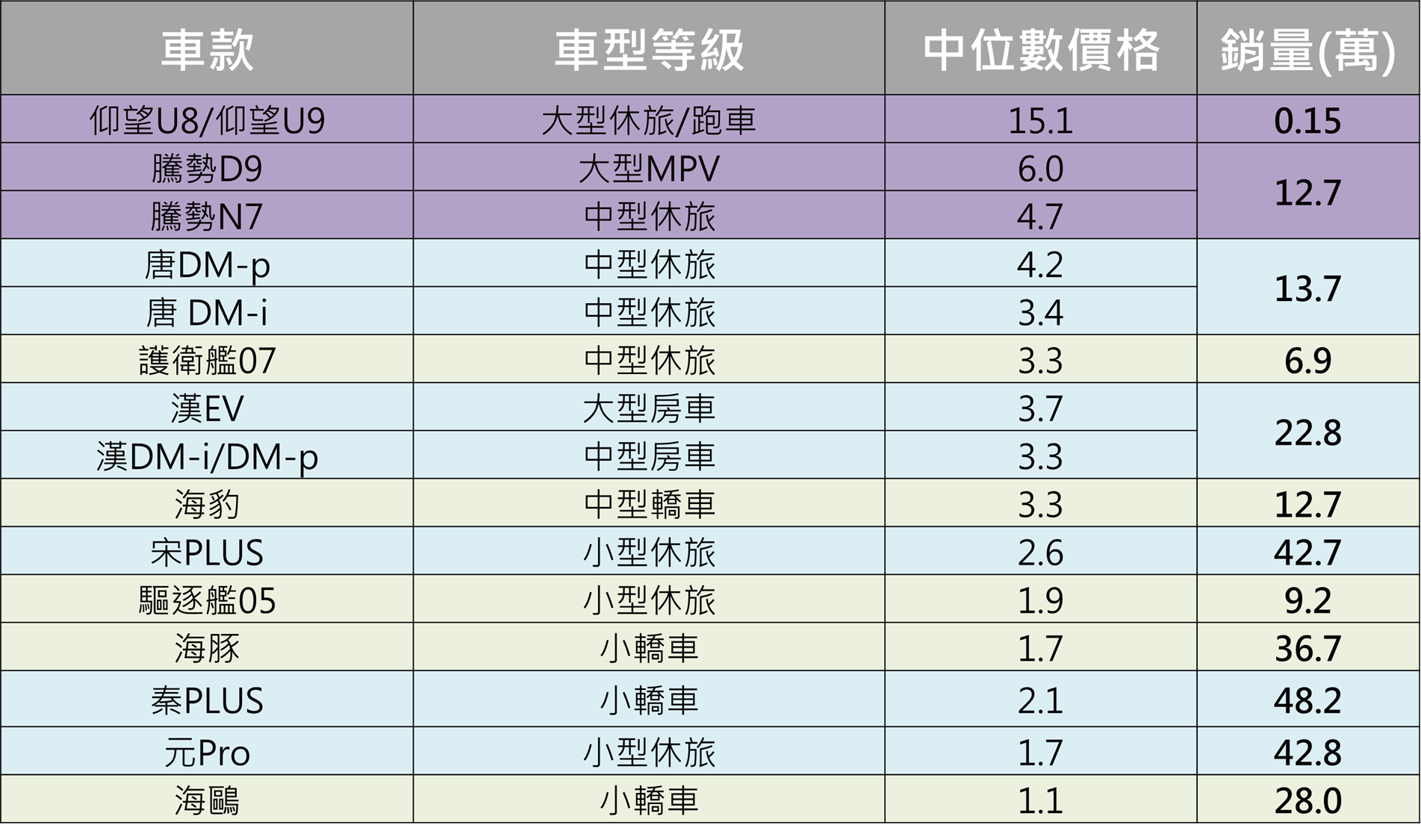
- Low-cost EVs: In 2023, the EV market entered a period of price competition, with Tesla taking the lead in price cuts, forcing a number of EV makers to follow suit. Since then, the advantage of a complete industrial cluster has been highlighted among Chinese car makers. Among them, BYD's high self-manufacturing rate has helped the brand to maintain cost flexibility while the average price of EVs is declining, and continue to launch low-priced models in response to buyers' demand for low-priced EVs. Looking back at BYD's sales volume in 2023 (Figure 2), we can see that in the low-priced range of less than US$33,000, five EV models will sell more than 400,000 units, totaling more than 2 million units, accounting for two-thirds of the total sales volume. And while the low-priced cars are selling well, the net profit of about RMB 30 billion, the excellent performance of annual growth of 80%, and the earnings of more than 10 dollars per share have broken the suspicion of losing money to sell cars. On the other hand, Tesla's cheapest car model is Model 3, with a mid-range price of about 37,000 USD, which is still about 4,000 USD higher than the Seal, the top-end of the low-priced models from BYD. The lack of cars in the lower price range is also one of the reasons why Tesla's sales will slow down in 2024, as evidenced by the fact that in mid-April 2024, when Reuters rumored that Tesla would abandon development of its $25,000 Model 2, the company's stock price fell 5% on the same day, forcing CEO Elon Musk to deny the news in a post on the social media platform X.
Figure 2: Models and Sales of BYD Vehicles
Source: BYD, Digitimes, EV inside; Organized by Jipu Industrial Trend Research Institute 2024/4
- A wide range of models: Combining the advantages of high production rate and production capacity, BYD has launched a series of models in recent years. According to the car models, it can be said that there is a full range of vehicles from extra-large MPVs, all kinds of RVs, large and small saloons, sports cars, and small cars, and the price ranges from US$150,000 or more for luxury models, US$30,000 to US$40,000 for mid-range models, and only US$10,000 for low-priced electric cars. The product line is so complete that it can be divided into high-level, oceanic, and dynastic car series to meet the needs of customers with different needs. In 2023, when China's domestic market is entering the red ocean stage, BYD has already set up production lines in Southeast Asia and Central and South America, with production lines opening in Thailand, Vietnam and Brazil respectively. Coincidentally, at the Munich Motor Show in the third quarter of 2023, Chinese automakers including BYD, SAIC, and Xiaopeng also turned their attention to Europe in an attempt to enter the European market quickly in the next few years due to the fierce competition in the domestic EV market as well as their own mature production capacity. According to a Digitimes report, BYD's overseas sales will grow by more than 3,30% in 2023, and sales are expected to more than double in 2024. It can be seen that, under the conditions of a complete product line, the company's plan to expand overseas markets has begun to move from layout to practice. Whether European and American car makers can come up with countermeasures to the onslaught of Chinese EVs will be a key factor affecting the future development trend of EVs.