電動車專題|電動車小型化拯救紅海市場(中)
作者:智璞產業趨勢研究所綠能中心主任 余適伯
Miniaturization of Electric Vehicles Brings Potential for Lower Prices, Power Savings and Functionality
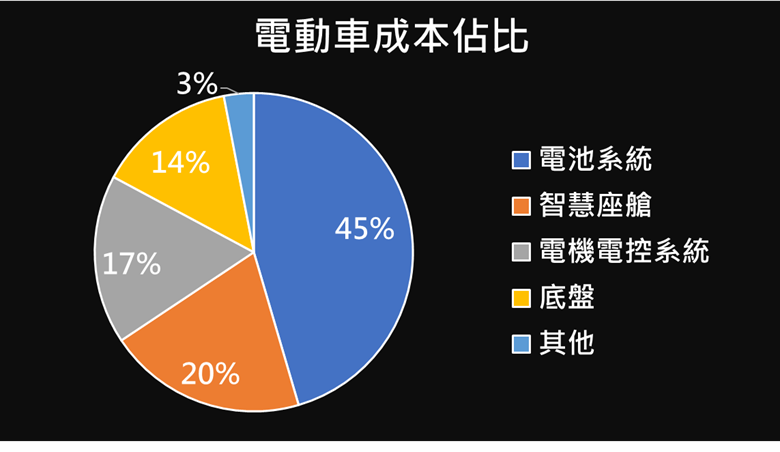
In the face of BYD's three major advantages to the international market, the development of electric vehicles in Europe and the U.S. must continue to ensure its competitiveness in the growing market of 30%~35% per year. In the absence of short-term changes in the supply chain structure, car makers still have to find ways to cope with the onslaught of low-priced EV products. Therefore, in addition to requesting suppliers to reduce prices, the long-term response strategy requires an examination of the cost structure of EVs (as shown in Fig. 3) to find a fundamental solution.
Figure 3: Cost share of electric vehicles
Source:Ji Pu Industrial Trend Research Institute 2024/4
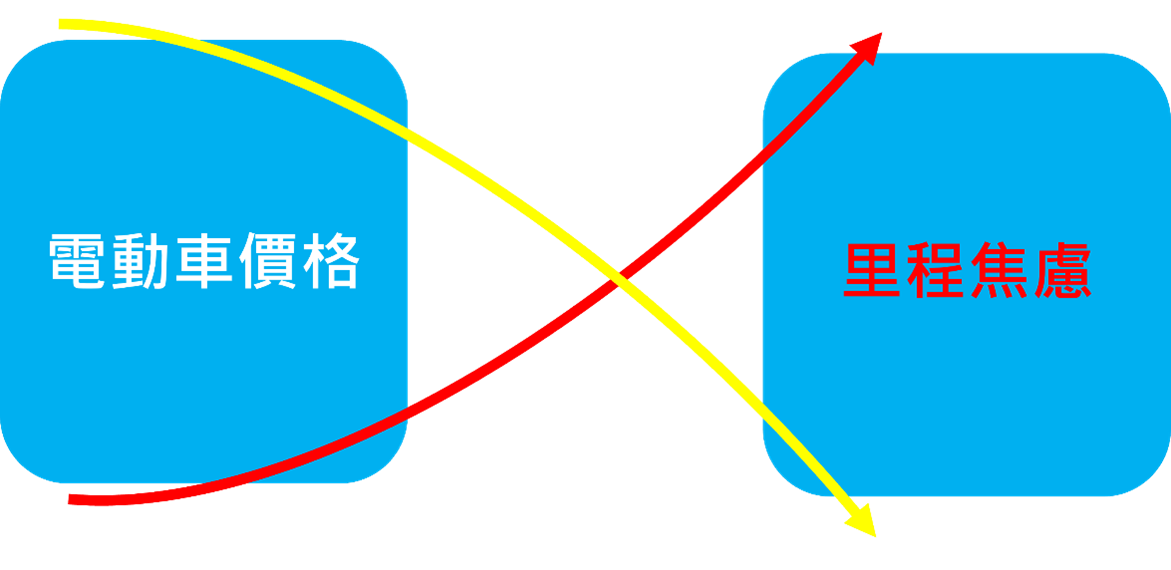
Among the cost share of EVs, the battery system accounts for the highest share of 45% (some models are even higher), while other components such as the intelligent cockpit (20%), electrical and electronic control system (17%), chassis and transmission (14%), etc., are mostly made of modular components as the direction of future development, and the reduction of the relevant functional modules will directly affect the driving experience; For example, in the environment of pursuing a sense of technology in driving, the demand for large screens and multiple screens in intelligent cockpits is an irreversible trend, and reducing the number of displays as a means of cost optimization will obviously violate the needs of consumers and will not be successful. Therefore, it is necessary to find the cost optimization that has the lowest impact on consumers in order to have a chance to reduce the price of EVs and make drivers willing to pay for them. Among them, cost optimization of the battery system is a potential solution. Since the battery system accounts for the highest cost, if we can reduce the battery carrying capacity or use cheaper battery materials (ex: sodium ion batteries) to reduce the cost of 50%, we can reduce the vehicle cost by about 23%, which is a higher benefit than other systems. However, no matter reducing the battery capacity or using lower-cost battery materials, it directly affects the total electric power of EVs. In an environment where the vehicle-to-pile ratio is too high due to the lack of infrastructure, reducing the total electric power is undoubtedly a way to increase the mileage anxiety of EVs, and there is a clear negative correlation between the battery cost and the mileage anxiety (Fig. 4). How to accomplish the reduction of EVs (battery cost) without raising the mileage concern or relatively alleviating it is the key. Among them, small EVs are expected to solve the EV price and mileage anxiety problem with lower price, lower power consumption, and functionalization, and thus develop the trend of functional EVs.
Figure 4: Electric Vehicle Price and Mileage Anxiety Show Negative Correlation
Source:Ji Pu Industrial Trend Research Institute 2024/4
Lower price: Referring to the Chinese EV market, we can find that due to the seriousness of the involution situation, the problem of price competition has already appeared in 2023, and in the face of the competition in the red sea market, the various car makers responded to the price reduction strategy towards miniaturization, including the Wuling Hongguang, Geely, Chery New Energy, BAIC and BYD, have launched the price of $12,000 or less, and the whole vehicle is relatively small compared to the current market for saloon car models and EVs. Smaller models. The Wuling Hongguang, a subsidiary of SAIC Group, launched the Splendid EV in 2023, which has accumulated sales of more than 220,000 units in just half a year of sales, allowing EV leader BYD to launch the Seagull model to compete with it, and the Seagull wrote more than 10,000 units of sales on the day of its launch, which is enough to show that consumers' acceptance of low-priced cars has not been affected too much by the miniaturization.
Figure 5: China Electric Vehicle Market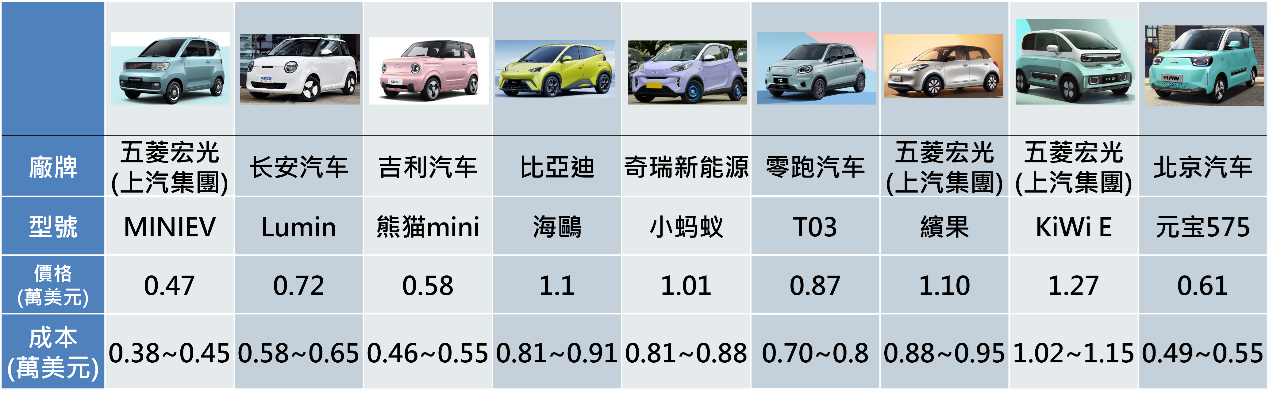
Source:Ji Pu Industrial Trend Research Institute 2024/4
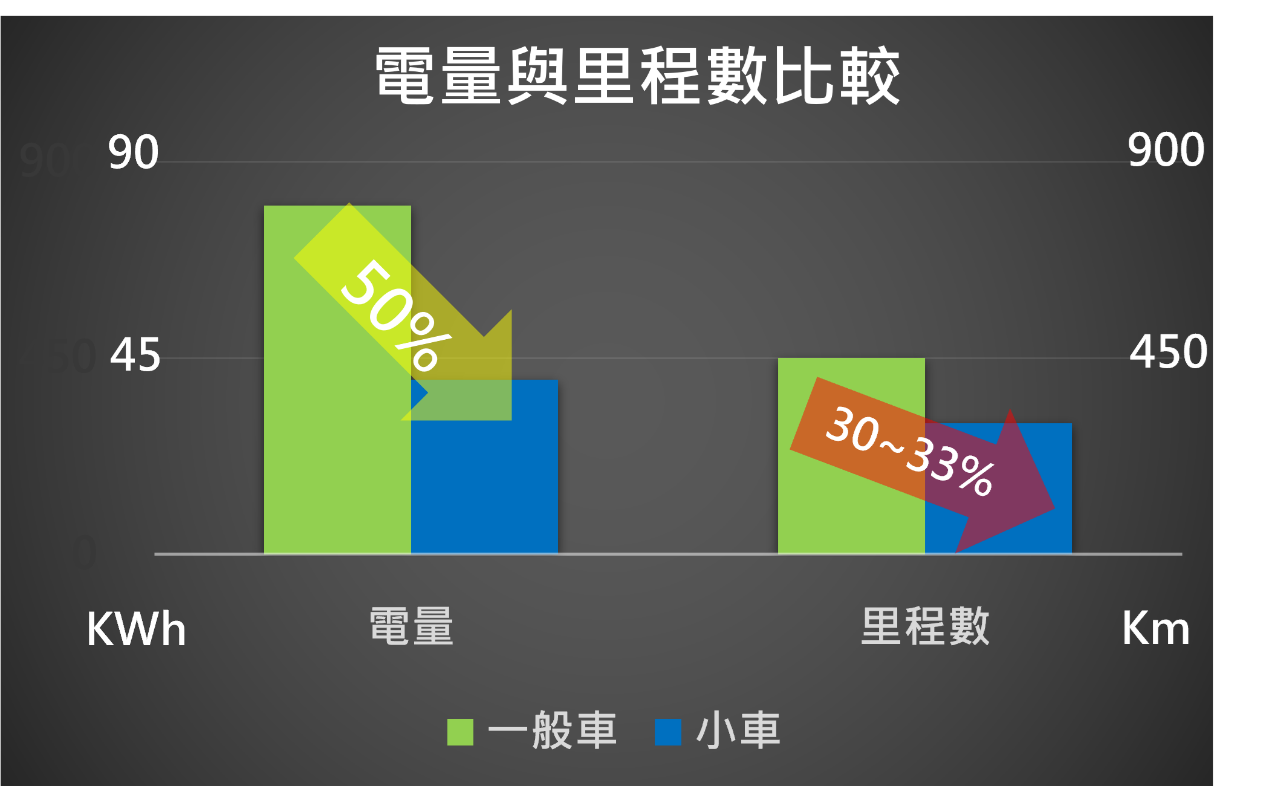
Lightweight: In addition to price, the lightweight nature of EVs and their positioning in the minds of consumers are also important factors that contribute to the reduction of mileage anxiety in small EVs. Looking at the role of the battery system in EVs, apart from cost, the less-discussed "weight ratio" is also one of the highest among all systems. If we use a fuel car as the standard of comparison, the average weight of an EV with a 400Km mileage battery (65~70KWh) is 1,000 lbs (451Kg) higher than that of a fuel car. Since vehicle weight has a great impact on energy efficiency, the lightweight effect of small EVs will bring better performance in terms of mileage per unit of electricity (Figure 6). If the battery capacity of the EV is reduced to 50%, the impact of the small EV will only be 30~33%. In the case of an EV with 600Km of total power, the battery capacity will be reduced to half of the original capacity, and the mileage of the small EV will be maintained at about 400km.
Figure 6: Electricity and Mileage Optimization Comparison of EVs
Source: Industry Trend Research Institute 2024/4
In addition, small cars are perceived by consumers as being used for urban commuting and short-distance mobility with relatively low mileage, so the mileage requirement is relatively low. From the European market, we can see that among the top ten selling EVs in 2023, Tesla still tops the list, but the relatively small FIAT 500e, VW ID. 3 and DACIA Spring have already entered the top ten ranking and occupy the 7th, 8th and 9th places respectively, especially the highest range of these three cars is only 320Km, which shows that even though the mileage of the small EV is a bit shorter, it still shows a strong performance in the European market. This shows that even with a slightly shorter mileage, small electric vehicles are still showing strong buying power in the European market.
Functionalization opens up new markets: The lower price of small EVs will have the opportunity to drive consumers toward the development of personalized EVs with optional functionalized modules. As the EV trend takes shape in 2019, the concepts of platformized chassis and module stacking have emerged to accelerate the introduction of EVs and improve vehicle manufacturing efficiency, and vehicle manufacturers are gradually accepting the new way of vehicle manufacturing. This change helps small EVs by enabling functional applications (entertainment or special) and personalization. Since EVs are affordable, for consumers who already own a car, a lower-priced EV can be used as a recreational alternative to a vehicle. Based on the platform of EVs, consumers can choose the functions they need (Figure 7), such as camping modules, beach surfing modules, pickup truck modules, and other special applications, and purchase their own EVs with personalized accessories. For car makers, the development strategy of small cars will no longer be limited to competing with fuel cars in the existing market, but will expand to the blue ocean of entertainment and functionalization in addition to the demand for transportation.
Figure 7: Functionalized Small Electric Vehicles

Source: Magic Minibus, Gimag, xBus; Organized by Chipotle Industry Trend Research Institute 2024/04