太陽能專題|n型TOPCon太陽能電池需求將起
作者:智璞產業趨勢研究所綠能中心主任 余適伯
The development of silicon-based solar cells can be traced back to the 1950s, when Bell Labs produced the world's first silicon-based solar cell, but at the time the conversion efficiency was only 61 TP3 T. With the first oil crisis in the 1970s and the realization that fossil fuels may one day be depleted, solar power technology began to receive more attention, with scientists pursuing the conversion efficiency of solar cells in the lab and companies pursuing the transfer of lab technology to the market. Scientists pursued the efficiency of solar cell conversion in their laboratories, while corporations pursued the transfer of laboratory technology to the marketplace. In the 21st century, the awareness of energy saving and carbon reduction has risen, coupled with the maturity of silicon semiconductor technology. Polycrystalline silicon PERC (p-type) technology has become the mainstream, with power generation efficiency reaching the technical limit of 22%. Over the past decade, China's strong investment in green energy has helped it become the world's major supplier of polycrystalline solar cells, with 80% of the world's solar "polycrystalline silicon" raw materials being produced in China. Now, with the p-type solar cell power generation efficiency is close to its physical limit, solar cell technology has come to the change of generation of the alternating moment, n-type TOPCon solar cell is about to take off in 2024 to meet the demand.
n型太陽能電池更有優勢,TOPCon技術將取代PERC
太陽能電池發電原理為,將p型及n型半導體連結(如圖一),在吸收特定波長的光後,p-n連接間形成一個光生載子(電子電洞對)從而產生電流。
圖一 太陽能電池發電原理
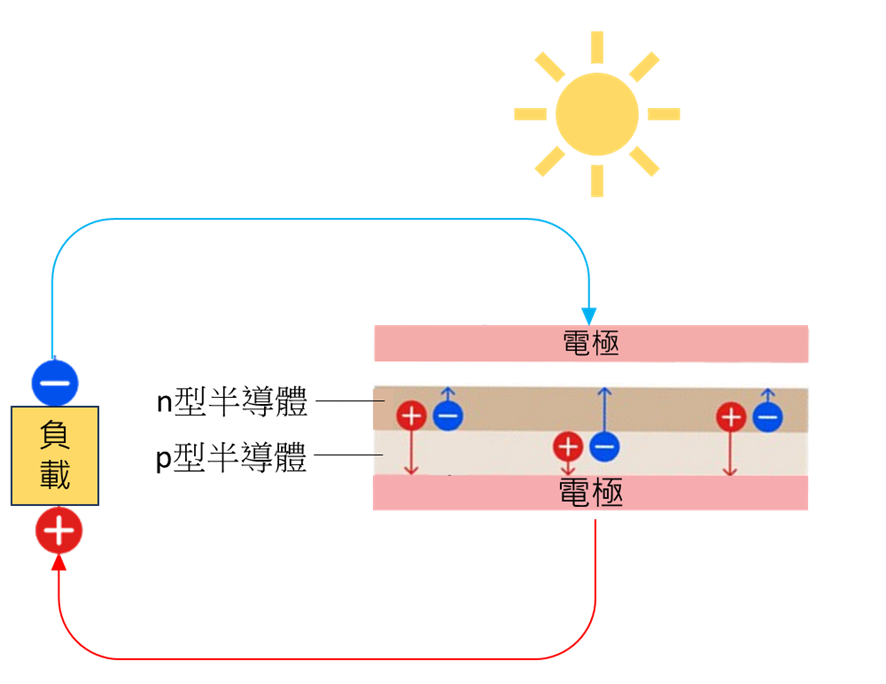
資料來源:日力能源;智璞產業趨勢研究所整理 2023/10
若是以p型半導體作為基板則稱為p型太陽能電池,現今主流的PERC太陽能電池即為p型基板的其中一種技術,主要是在製程時參雜硼元素,使其成為以電洞作為載子的矽基板。p型太陽能電池具備成本優勢因製程較n型簡單,在過去幾年發展較為成熟也一直是市場的主流技術。但隨著我們對於太陽能發電效率的追求,p型太陽能電池無可避免的遇到一個問題,就是光衰現象造成能量轉換效率極限及載子壽命降低。
近幾年的研究發現,光衰現象主要來自於p型太陽能電池所參雜的硼原子,當太陽電池照射到光時,硼與兩個氧原子結合成氧化硼(BsOi2)造成硼原子無法再生成電子電洞對。從電池製作前的晶片到製作完成後,只要在一定強度的光照下,光衰現象便會機率性發生並無法避免。n型太陽能電池參雜磷作為載子,沒有硼氧鍵結帶來的光衰現象,因此載子壽命更長、發電效率較佳,且n型太陽能電池在高溫與低光度環境下轉換效率更佳,雙面受光發電能力(雙面率 Bifacial Ratio)也優於p型電池,被認為有機會取代其成為下一世代的新技術。
n型太陽能電池主流技術有三種,分別為TOPCon、HJT以及XBC,其中TOPCon和PERC除了基板使用不同型的參雜元素外,TOPCon背面引入了隧穿氧化層加摻雜薄多晶矽層。通過熱氧法生長約1.5-2nm的隧穿氧化層,再用低真空化學氣相沉積法(LPCVD)長出多晶矽層,最後進行磷摻雜。TOPCon因為與PERC技術製成及設備相容性較高,這幾年來受到國內外電池廠商的青睞。目前成本已逐漸接近PERC,來到每千瓦7-8000元新台幣。
根據 SolarBe Global報告指出,2022年n型太陽能電池需求已出現,在2023年TOPCon技術更成長到近20%市占率,相反的PERC技術則呈現下降趨勢,預計在2024年中間TOPCon將與PERC的市佔率達到交叉,正式成為市場主流(如圖二)。而TOPCon市場規模亦將由2022年的90億美金以22.7%的年均成長率,在2032年達到696億美金。
圖二 全球太陽能技術佔比
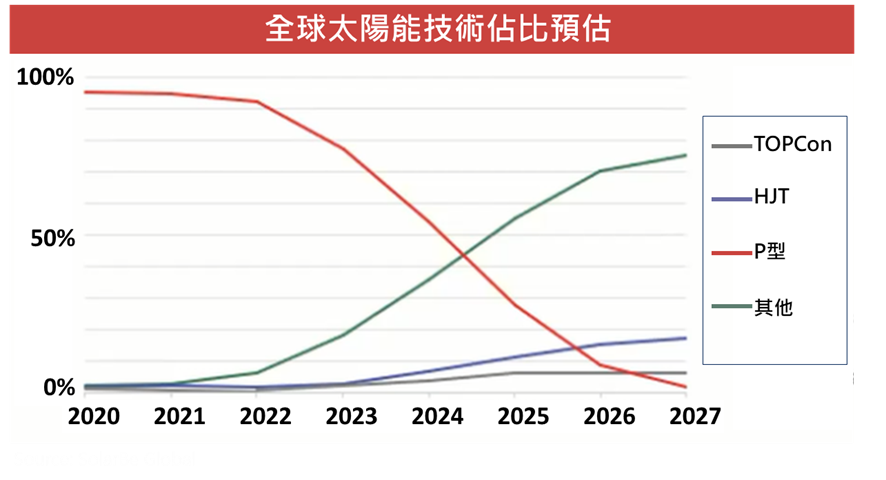
資料來源: SolarBe Global
國內廠商TOPCon以茂迪為首,預計2024年開始大量出貨
過去幾年由於PERC太陽能電池模組已被中國供應鏈拿下,國內廠商在國際市場上較難與中國企業競爭,故在2022年已有廠商開始轉往TOPCon技術研發,期待以新世代太陽能模組取得先機。
茂迪為台灣最早轉進到TOPCon太陽能電池的企業,TOPCon電池模組轉換效率已達24.5%,預計於2024年大量生產大尺寸(M10)TOPCon太陽能電池,生產線將超過六成生產TOPCon太陽能模組,屆時年產能預估可達400MW。
元晶是目前全台灣太陽能產能最大的公司,日前傳出在下世代太陽能產品已確定會導入TOPCon技術,規劃2024年第三季完成1GW產線布建。
聯合再生最近發布在TOPCon技術方面取得重大突破,太陽能電池發電效率達到了28.7%。公司宣布將啟動大規模生產線,預計在2024年第二季開始量產,年產能將達430MW。
中美晶也在今年宣布將投入n型TOPCon太陽能電池技術,生產大尺寸M10太陽能電池,第一階段將建立400MW的產能,並計畫進一步佈局台灣和美國市場。
-For more information, please contact us at