May_Tariff War|Information Service Industry: In an Uncertain Market, Seeing Certain Opportunities
The year 2025 is destined to be a year of dramatic structural shocks for global politics and economics. As Trump returns to the center of power, policy coherence and market stability are being challenged like never before. From the 4/2 global tariffs and pressure to lower interest rates to the unblocking of AI and the liberalization of regulations, Trump has shown his usual "fickle" style. And the underlying logic behind this is that the "systemic pressure" on U.S. debt has quietly surfaced.
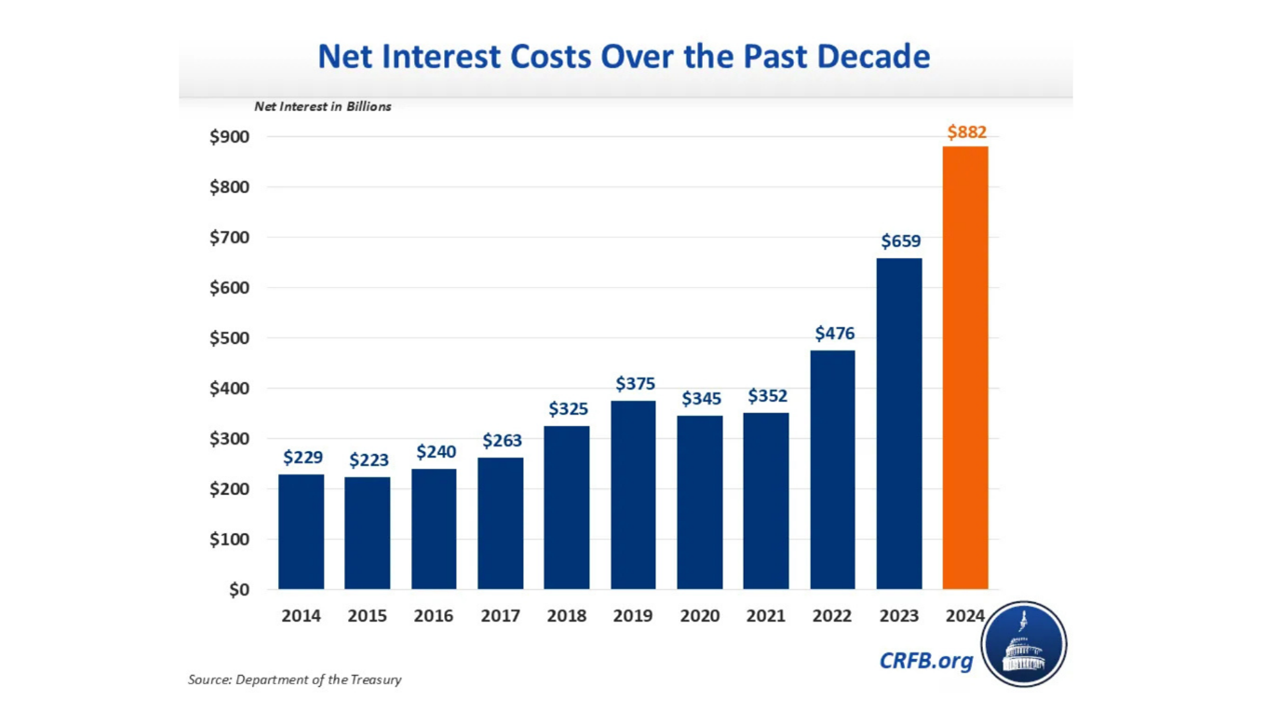
As of 2025, the size of the U.S. debt has already exceeded 36 trillion U.S. dollars, and last year, interest payments alone reached 880 billion, equivalent to the entire U.S. national defense budget. What is even more worrying is that the U.S. debt due to mature in 2025 will be as high as 9.2 trillion, accounting for more than 25%.
Chart 1 Interest Expenditures on U.S. Treasury Bonds in the Past Ten Years
Source: U.S. Federal Government website
What is more worrying is that the average interest rate of these U.S. bonds falls at 2.5%, which means that under the premise of issuing new bonds to repay the old ones in the future and borrowing at the current interest rate of 4.5%, the interest rate in the future will aggravate the fiscal deficit. Against this backdrop, the logic behind Trump's "policy swing", in which he asks countries to come to the negotiating table by raising tariffs on the one hand, and keeps pressuring the Federal Reserve to lower interest rates on the other, in the hope of lowering the cost of debt financing, is obvious. It is true that high tariffs will lead to inflation and recession, the former hindering interest rate cuts and the latter indirectly affecting the return of manufacturing industries. Therefore, by negotiating a 10~15% "full tariff" as a final destination, we can generate US$180-330 billion in revenue per year and retain the flexibility of governance. But even so.
混亂中尋找穩定:不打仗也能賺錢的企業
如前文所提,當「不確定」成為我們已確定的未來,市場勢必重新評估風險配置,過往以北美市場做為主要銷售地區的企業,將直接受到衝擊。資金轉向避開北美出口導向的產業,特別是電子、汽車與消費品的高關稅區段,轉而尋找不受貿易衝擊、內需穩定、現金流可預測的投資標的。
在這個背景下,「資訊服務業」因為三大特性而受到關注:
- 區域化程度高,不仰賴外銷市場
- 高黏性商業模式,導入後不易替換
- 數位轉型與AI應用落地紅利
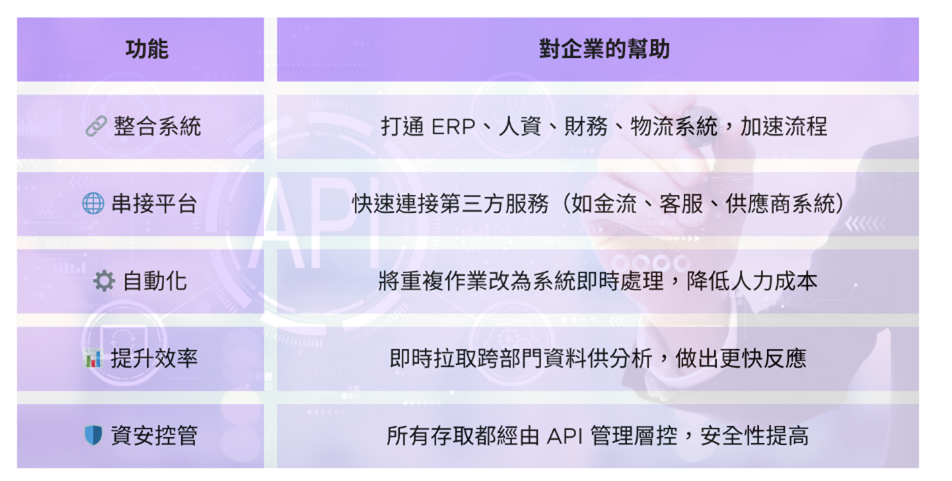
而在資訊服務產業中,「API管理」則因其為「數位轉型」與「AI應用落地」的核心正在迅速崛起。API(Application Program Interface)是IT架構中各系統交換資料的橋樑,它就像是電腦與電腦用來做資料傳輸的一個插頭與插座。透過API,電腦可以得到其他系統當中想要得到的代碼、數據跟資訊,其內容涵蓋涵蓋 ERP、人資、銷售、客服、AI 模型、IoT、APP 等各種應用模組整合(如圖二)。
圖二 API 管理對企業的貢獻
資料來源:智璞產業趨勢研究所整理 2025/5
根據 Verified Market Research顯示,「API 管理」市場預計將從2024年的100億美元以34%年成長率,在2030年達到約520 億美元。
這個趨勢的代表企業之一,是來自新加坡的 Kong inc.。Kong利用開源API Gateway 切入市場,開發多雲架構管理與平台型工具,2017年才設立卻在2024年突破20億美元市值,成為亞太最具代表性的「API管理」企業。
而在台灣,我們則關注在地公司「昕力資訊」。昕力長期深耕「API 管理」、「多雲整合」與「數位轉型服務」。自研兩大產品「DigiLism」與「SYSTALK系統」,其中 DigiLism 系統下的 DigiLog API 產品為企業數位轉型提供最佳解決方案。SYSTALK則運用 AI 技術,助企業導入應用、推動數位轉型並提升營運效率,為「AI應用落地」提供最有效率的解決方案。昕力資訊以「數位轉型顧問」+ 「客製化後端整合」的方式,在台灣深耕包含銀行、保險、政府與醫療四大產業。
銀行業:昕力協助串接帳戶系統、交易紀錄、KYC 身份認證與 API 安全存取控管,支援資料回寫、版本管理與操作審計。
保險業:昕力串接核保、理賠、法遵與銷售系統,使各單位在一套整合平台上運作並串聯多端查詢,減少資訊孤島。
政府部門:昕力熟悉標案導入流程,能以模組化方式落地複雜的招標規格,並長期負責維運與升級。
醫療體系:昕力支援 FHIR、HL7 等醫療資料傳輸標準,協助醫療院所實現 HIS、LIS、雲端資料庫與行動裝置應用之間的資料整合與存取權限控管。
這些產業的共同特性是導入難度高且審核流程複雜,但一旦進入企業合作後,服務內容難以取代,被視為是具備長尾效應的客戶類型。
此外,昕力已連續兩年獲得台灣精品獎,並握有多項 API 與資料整合相關的發明專利,技術力深獲市場肯定;更是台灣唯一連續三年(2022-2024)入選《Financial Times》「亞太區高成長企業500強」,展現出強勁成長性與國際認可,是產業數位轉型領域中的隱形冠軍。
綜上所述,我們不難發現2025 年將是政策多變、全球關稅議題詭譎、供應鏈重組的不穩定年份。即便 10% 關稅已是可預見的未來,但仍存在眾多不確定因素,哪些國家會被豁免、哪些產業將成為犧牲品、哪些供應鏈會轉進美國或離開中國仍充滿變數。而越是在這種不確定中,資金需要尋找能符合趨勢、滿足政策支持並避開地緣政治風險的確定性產業。資訊服務業,尤其以API管理為主軸、深耕區域性收入及穩定收入領域的企業,是這場轉折下最具潛力的價值所在。
 May_Foreign Exchange|The Impact of NTD Appreciation on the Two Major Automotive Component Industries
 June_Self-driving Taxi Feature|Impact of Robotaxi on the market