April_Tariff War|Tariff War Extends, Drugs Become New Concerns
Commentator: Shin Chung-chul, Director of Health Center, Ji-Pu Industrial Trend Research Institute
Under Trump's reciprocal tariffs, medical devices and equipment have become victims, and are included in the scope of tariff increase, which is a direct impact. Although Trump temporarily pressed the 90-day suspension button, the universal 10% tariffs still exist, which puts pressure on the medical devices and equipment industry; while pharmaceuticals (finished drugs) escaped in 4/5 and were included in the initial exemption list, but with the U.S. about to release a new report of the National Safety Investigation Recommendations for Imported Drugs and APIs, it seems to be forecasting the initiation of an investigation into the importation of drugs, which will pave the way for the U.S. to impose tariffs on pharmaceuticals. However, with the upcoming release of the new "Recommendations for National Safety Investigations of Imported Pharmaceuticals and Pharmaceutical Ingredients" report, it seems to be a preview of the initiation of the investigation of pharmaceutical imports, which will pave the way for the U.S. to impose tariffs on pharmaceuticals.
This article predicts that the U.S. will be inclined to announce the imposition of tariffs on drugs worldwide in the future, in line with President Trump's policy aspirations that have been mentioned many times. The geopolitical influence of the U.S. may have already surpassed the U.S.'s internal concerns about drug shortages or price increases, but it is not known how much tariffs will be imposed, or whether there will be any possibility of suspending, delaying, or reversing them. However, it is certain that the tariffs on imported drugs will be "levied" and "exempted" or not, and will be used as an important bargaining chip and a live chess piece for the United States and other countries in future trade negotiations, with geopolitical considerations being the main component, and the probability of actually landing on the large-scale level of the global pharmaceutical supply chain is relatively small, as the demand for the supply of basic medicines (essential medicines) relates to the lives and health of the people of the United States, but for China, India and the European Union. However, the possibility of partial tariff adjustments for China, India, and the European Union, which are importers of U.S. medicines, is high, which will in turn promote cash-rich large international pharmaceutical companies to re-examine their future investments or force them to choose sides, lower their willingness to invest in Europe, and accelerate the flow of investment back to the U.S. In fact, it is hoped that economic coercion will be used globally to compel trading and investing partners to assist in the restructuring of the U.S. debt.
Rapid policy changes, repeated adjustments in tariff strategies, and the lack of a clear final tariff rate have plunged the global biotechnology and healthcare industry chain into a "high degree of policy uncertainty." In addition to concerns about the imminent imposition of tariffs on pharmaceuticals in the future, this has also put heavy pressure on the global pharmaceutical supply chain and the operations of U.S. medical and healthcare companies in the U.S. market. If the U.S. formally imposes a tariff on pharmaceuticals (which has not yet been announced), externally, in the short term, it will not only make it difficult for pharmaceutical companies to shift their supply chains to cushion the impact of the tariff, but it is also expected that the tariff on pharmaceuticals will lead to an increase in the cost of U.S. drug imports by more than 151 TP3T-251 TP3T, or even more, and that brand-name pharmaceuticals (patented originator drugs) can absorb the tariff cost on their own in the short term due to the abundant profits. The brand-name drug (patented originator drug) industry can absorb the tariff cost by itself in the short term due to abundant profit, but the brand-name drug/biosimilar drug (generic originator drug) industry with poor gross profit may reduce the supply in the U.S. market due to cost considerations, resulting in difficulties in obtaining the relevant drugs; and with the U.S. becoming increasingly hard-line in its trade stance with China, aggravating the escalation of the trade war, it may also lead to a shortage of some of the raw materials supplied by China; domestically, U.S. healthcare industry and hospital system do not have sufficient profit to offset the increase in tariff cost. On the domestic front, U.S. healthcare providers and hospital systems do not have sufficient profits to offset (or absorb) the rising costs of drug supply, which, in addition to being passed on to health insurers or U.S. patients, may cause the U.S. domestic healthcare system to cut back on healthcare administrative expenditures in order to reduce hospital operating costs or continue to search for the most cost-effective supply chain solutions in order to offset the impact of rising drug prices, which will further lead to a decline in the quality of healthcare and an impact on public health and safety, while the poorly run U.S. healthcare system may not have the resources to meet its costs. Poorly run U.S.-based healthcare providers or hospitals may face bankruptcy or seek consolidation solutions to overcome the crisis of rising supply chain costs through joint purchasing economies of scale.
U.S. drug tariff war is imminent, medium- and long-term APIs are difficult to directly decouple from China
In terms of the local demand for drugs in the U.S., the U.S. is a global powerhouse in new drug research and development and pharmaceutical manufacturing among developed countries, producing approximately 60% of brand-name drugs globally, but at the same time, it is also one of the countries with the most serious drug shortages, with shortages of not brand-name new drugs, but rather focusing on older drugs such as anticancer (chemotherapeutic) drugs, pain relievers and antibiotics, etc., whose patents have expired for long periods of time, which are low-priced, or which are urgently needed by the clinic. In addition, the amount of generic drugs used in the United States accounts for approximately 90% of the prescription drugs in the United States, and the United States has long relied on Chinese APIs and Indian generic/biosimilar drugs for a large number of essential medicines. Data from the U.S. Department of Commerce show that the U.S. pharmaceutical industry relies on China for approximately 28%~32% of its APIs, and India is the largest importer of generic/biosimilar drugs from the United States. According to the statistics, the total amount of relevant drugs imported from India is about 14.8 billion U.S. dollars, accounting for about 6.2% of the total amount of U.S. drug imports, of which the proportion of generic drugs from India accounts for more than 45%, and the proportion of biosimilar drugs accounts for about 15%.
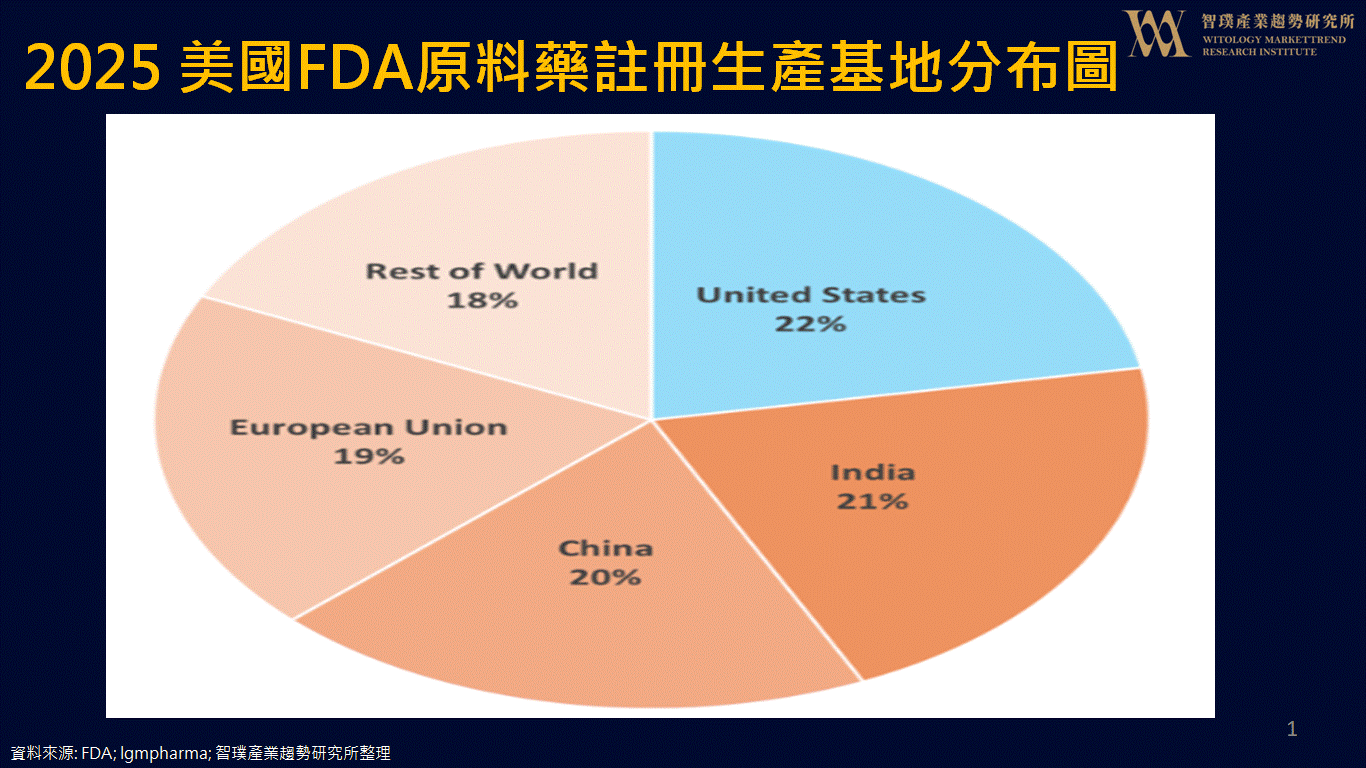
As shown in Figure 1, analyzing from the FDA registered API production bases, the supply chain of APIs in the United States is highly dependent on overseas sources, with registered API production bases from India (21%), China (20%) and the European Union (19%) amounting to 60%, while China's API production accounted for about 20% of the global total, and the value of China's pharmaceutical exports reached US$53.953 billion in 2024, of which API exports amounted to US$42.98 billion, accounting for about 80% of the total exports, and exported to 189 countries. In 2024, China's pharmaceutical exports amounted to US$53.953 billion, of which the export amount of APIs amounted to US$42.98 billion, accounting for 80% of the total exports, and exported to 189 countries, and the amount of APIs exported to the U.S. amounted to US$4.52 billion. China not only has huge production capacity of APIs and pharmaceuticals, but also possesses a cost advantage of 35-40% lower than that of the APIs industry in the U.S. and Europe. China not only has huge production capacity of APIs and pharmaceuticals, but also has a cost advantage of 35-40% less than that of European and American API companies. Analyzing the source of APIs contained in drugs sold in the U.S., about 75% of APIs come directly or indirectly from China, and even if the U.S. imports generic drugs/biosimilars produced in India, about 70% of APIs or intermediates may also come from China. In addition, approximately 40% of the generic drugs are supplied by only one or two API manufacturers, and if one of the API manufacturers withdraws from the U.S. market, it will make it more difficult for U.S. pharmacies and hospitals to obtain the drug, and if multiple API manufacturers stop exporting to the U.S. due to tariff issues, it will contribute to a shortage of the drug or an increase in the price of the drug.
Figure 1.2025 Distribution of U.S. FDA Registered API Manufacturing Bases
Sources: FDA; lgmpharma; Organized by Wisdom Industry Trend Research Institute
Although U.S. pharmaceutical companies have attempted to shift orders for APIs such as ibuprofen from China to India, the U.S. still relies on China for approximately 90% of its antibiotics, mainly due to India's hot climate, which is not conducive to large-scale fermentation and production of antibiotics, as well as Europe's lack of competitiveness due to excessively high labor costs, and the lack of competitiveness of China in the low- and mid-end pharmaceuticals even with the imposition of a high tariff on pharmaceutical products, not to mention that low- and mid-end pharmaceuticals have a cost advantage due to high construction costs and time in the United States, which makes it difficult to return to the United States. Even with the increase in tariffs on pharmaceuticals, China still has a cost advantage in the low-end pharmaceutical field, not to mention that low-end pharmaceuticals are difficult to return to the U.S. due to the high cost and time of plant construction in the U.S. Therefore, it will be difficult for the U.S. to directly disengage itself from the reliance on Chinese API imports in the medium to long term. If the U.S.-China drug trade war officially begins, not only will the cost of the entire pharmaceutical supply chain be pushed up, but drugs may also be interrupted due to price increases, further aggravating the problem of drug shortages.
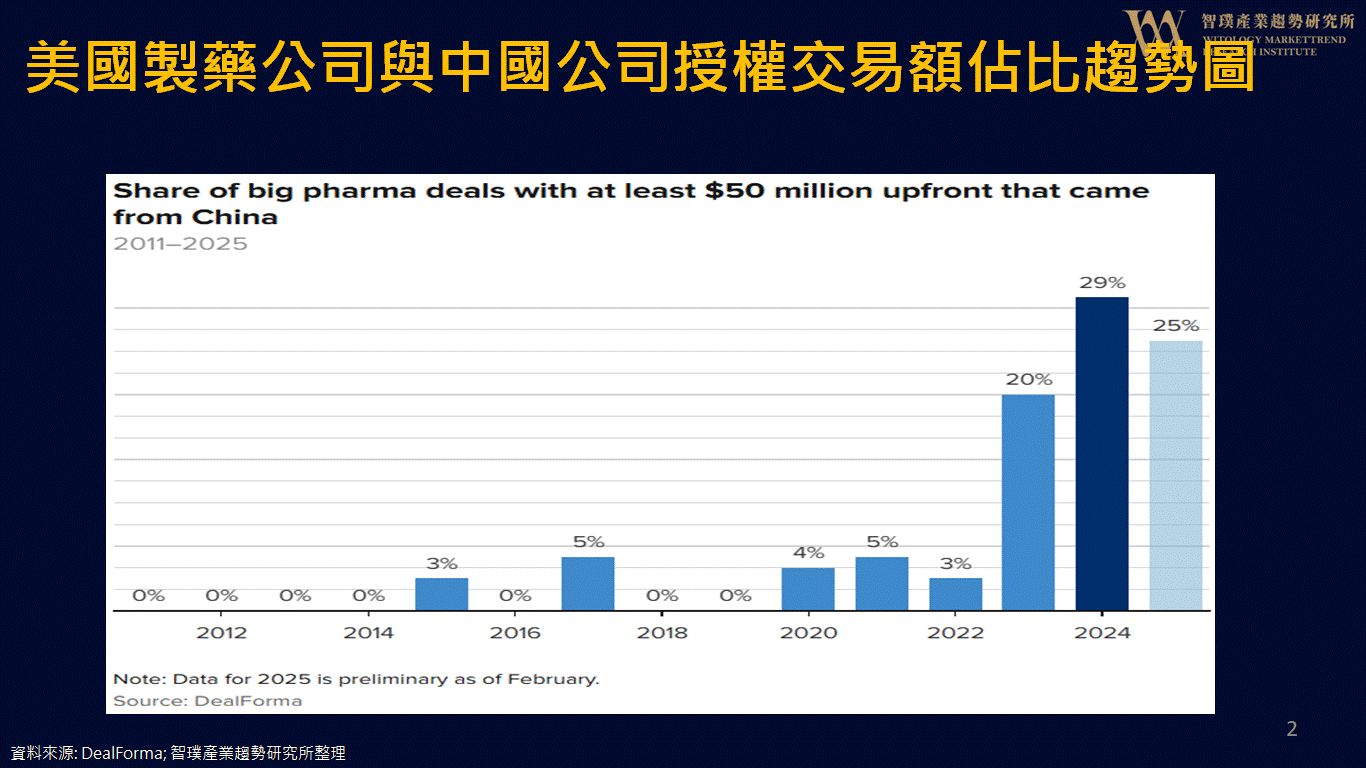
In addition to the United States' heavy reliance on imports of medium- and low-end APIs and generic drugs, U.S. pharmaceutical companies are also overly reliant on China's pharmaceutical supply chain in all aspects of new drug development and commissioned manufacturing, from the synthesis and development of APIs for new drug candidates, to the commissioned manufacturing of drugs used in clinical trials, and to the commissioned manufacturing for commercial mass production, all of which are inseparable from China's APIs and the commissioned manufacturing (CDMO) of the key production chain, according to data from a 2024 survey conducted by the BioPharma Institute (BIO), 79% of U.S. pharmaceutical companies rely on China's WuXi PharmaTech to complete key production processes. According to the 2024 survey data of the Biopharmaceutical Industry Association (BIO), 79% of U.S. pharmaceutical companies rely on China's WuXi PharmaTech and other companies to complete the key production processes. What is more noteworthy is that, as shown in Fig. 2, in the stage of clinical trials of new drugs, the proportion of high-licensing deals (>$50 million) between U.S. large pharmaceutical companies and China's new drug companies has continued to climb, which indicates that more and more U.S. companies are abandoning the licensing of new drugs for clinical candidates from U.S. innovation companies and instead bidding for the licensing of new drugs from Chinese companies. This means that more and more U.S. companies are giving up licensing clinical new drug candidates from U.S. innovative drug companies, and are instead competing to buy Chinese clinical new drug candidate assets; in the field of advanced gene therapy, China has also mastered the global supply of core biomaterials, such as 75% vectors and CRISPR enzymes. In terms of the division of labor between the U.S. and China in the biopharmaceutical industry chain, the U.S. mainly relies on China's pharmaceutical raw materials, high-quality human resources, as well as low-cost manufacturing capacity and clinical trials, while China relies on the U.S. advantages in pharmaceutical innovation technology, business model and sales market. With the extension of the U.S.-China tariff war, the U.S. consolidation of global biotech-medical hegemony will accelerate the risk of "hard delinking" of the U.S.-US biotech-medical industrial chain dependence and cooperation, and the future layout and strategy of the biotech-medical industries of the two sides will face major challenges, and the long-term competition will become even more heated.
Figure 2: Trend of Share of Licensing Deals between Large U.S. Pharmaceutical Companies and New Chinese Pharmaceutical Companies (>US$50 Million)
Source of information:: DealForma. Organized by Ji-Pu Industrial Trend Research Institute
If the U.S. imposes a specific tariff on pharmaceuticals in the future, it is expected that China and India, which rely on low-cost, large-scale production of pharmaceuticals, will be hit harder by the tariff; Taiwan's API sales to the U.S. may also be hit by the tariff and dilute profits; and the European Union (EU), which is affected by the tariff on the export of high value branded pharmaceuticals, will suffer from erosion of gross margins, which will reduce the willingness of branded pharmaceuticals manufacturers to invest in the EU and, on the contrary, increase the incentives for investing in the U.S. Overall, the tariffs will push up the cost of imported raw materials and drugs, which will aggravate the cost of medication in the U.S. Ultimately, the rising cost of drugs will be passed on to insurance companies or U.S. patients, which will lead to a worrying outlook for the future profitability of health insurance companies. After all, drug shortages and rising drug costs caused by the tariff wars not only jeopardize the health and safety of patients, but also the safety of the U.S. public healthcare system.
-For more information, please contact us at
 April_Tariff War|U.S. reciprocal tariffs hit the global biotech and pharmaceutical industry, and the industry is "crapping its pants".
 May_CDMO Topics|Asia CDMOs are back with new opportunities